
 Growth Strategy
Automate lead follow-up—not the customer relationship

At 10:00 a prospect requests a consultation. At 10:01 an “exclusive opportunity” email arrives, ten minutes later WhatsApp repeats it, and that afternoon a salesperson calls without knowing about either message. The company counts three follow-ups; the customer feels nobody listened.
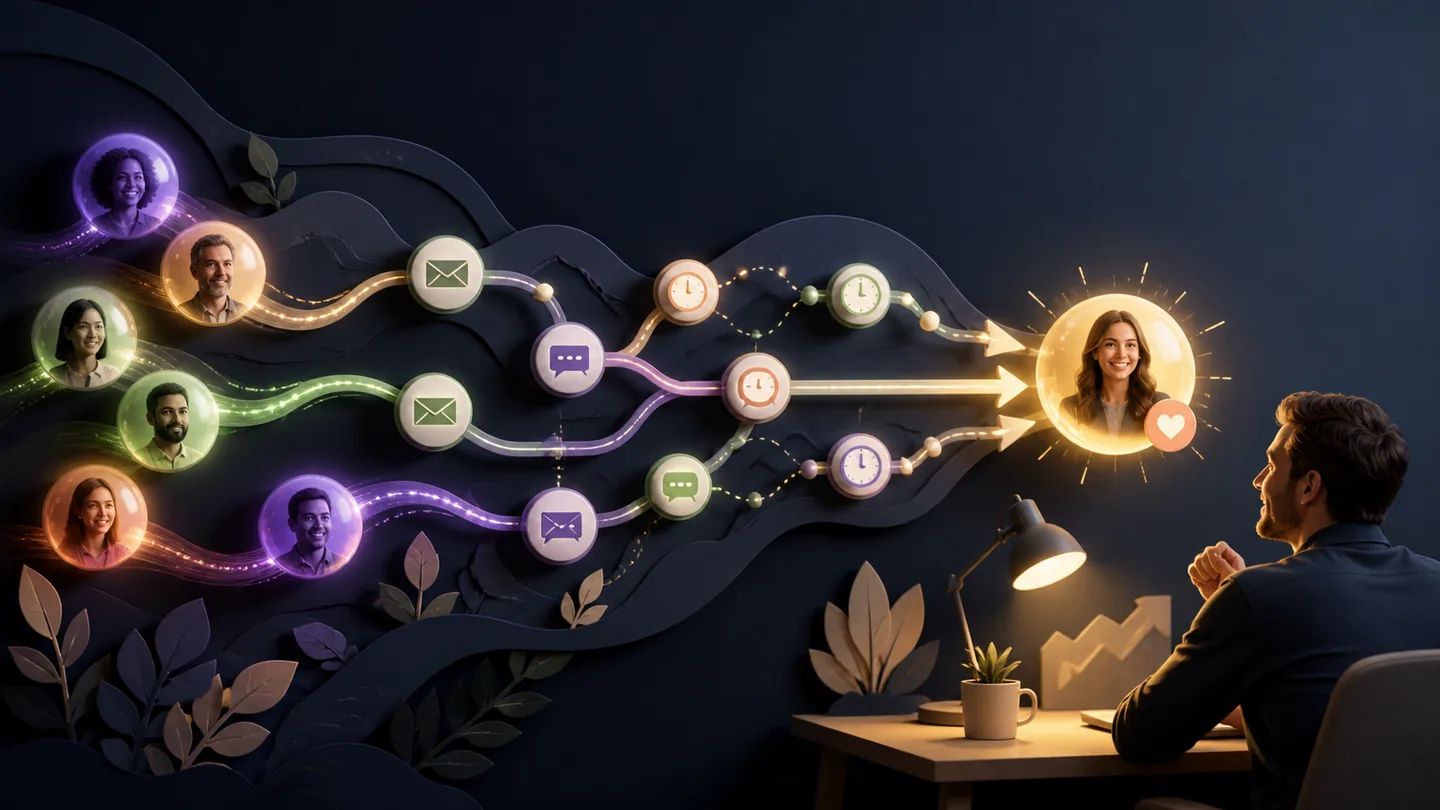
Automation should begin with the relationship stages and their exit rules, not with message copy. Personalising a first name cannot make an irrelevant sequence human.
Map the lead lifecycle on paper
New, qualified, awaiting response, meeting booked, won and lost need operational definitions. Every transition needs a trigger, owner and response deadline.
Source, problem, approximate budget and decision timing can help. An oversized form mostly reduces completion.
Write stop conditions before sequences
When a person replies, books, opts out or enters an active sales stage, earlier messages must stop. Missing stop conditions create most robotic experiences.
Begin scoring with behavioural evidence. Pricing views, repeat visits and replies may signal intent; a job title alone does not.
Give the human useful context
A salesperson should not ask questions the customer already answered. Attach the need, relevant activity and latest interaction to the follow-up task.
Review delivery, reply, meeting and conversion rates by source each month. The goal is not more messages; it is faster, more relevant conversations.
Rules to document
- Definitions for every lead stage.
- Owner and SLA for each stage.
- Trigger and purpose of every message.
- Stop and opt-out conditions.
- Sales handoff and outcome reporting.
Official resource: HubSpot workflow documentation

Reader comments
Share your experience, question or critique about this article with other readers.
Start the conversation
Share a point or question about “Automate lead follow-up—not the customer relationship”.